
Robots that can work
and live among people.
Listen. Respond. Improvise.
Solfa is a robotics company working on embodied social intelligence.
Our goal is to bring robots truly into human society — serving the public and individuals safely, continuously, and reliably, and adapting to different settings and needs.
Today, embodied AI still treats completing physical tasks as its main goal. Solfa holds to one judgment:
Social intelligence is the foundational capability a robot needs to serve people. It must enter the robot's design and training from the very beginning.
This direction is still early, with many hard problems to solve. But we believe we have chosen the right questions and the right path.
The missing person in embodied AI
When people see a robot, they often walk up to it and wave, almost without thinking.
What we want to confirm is not just whether its camera captured the frame, but: did you notice me? What state are you in right now? Can I interact with you?
Robots are getting better and better at doing things — recognizing objects, understanding space, planning paths, using tools, completing ever more complex physical tasks.
But when a person actually stands in front of one, we still can hardly tell whether it has noticed us, whether it understands the moment, or whether it knows who its actions will affect.
In today's robot intelligence models, objects, space, and tasks are becoming clearer and clearer, while the person — in any real sense — is still often absent.
Not only the physical world, but human society
Embodied AI is bringing the capabilities of large models into the physical world: robots are learning to fold laundry, clear tables, assemble boxes.
This work is important and necessary, but the path is far from settled — what data we collect and how we evaluate will decide what future robots regard as the world.
If the world consists only of objects, space, motion, and pre-given tasks, then people can only appear in it as issuers of commands, demonstrators of motions, providers of reward signals, or moving obstacles to avoid.
But in the future robots will enter our lives as colleagues, service providers, assistants, and collaborators. They will need to serve people's needs reliably and continuously.
What robots are entering is not only the physical world but human society; what they face is not only space and objects but social beings.
Agent ↔ Agent(s) ↔ Environment (Physical & Society)
Once robots enter malls, hospitals, schools, and homes, goals are rarely complete, and different people expect different things from the same service. Delivering a glass of water to a given position is a physical task; judging when to hand it to whom, which side to approach from, whether to give a heads-up first, and whether to wait or set it down when the person does not take it — that is a service problem inside a social situation.
So people are not variables outside the task. They should be part of the goal, the feedback, and the meaning itself.
Success at a physical task can usually be defined before acting; a robot that serves people has to work out, together with them and in the middle of the interaction, what counts as success.
AI's own development points to the same thing.
Speech recognition became accurate enough years ago, yet voice assistants never became a primary way of interacting. What was missing was not accuracy but timing: when to speak, and when to stop.
What has actually moved the field in recent years are turn-taking and full-duplex models that treat “when to speak” as something to model independently of “what to say”: even in a narrow, single-channel domain, timing has proven to be its own dimension of capability.
A robot, meanwhile, has six channels at once: gaze, distance, posture, tone, face, and speech. And a robot's consequences are more direct — when a large model answers badly, you can ask again; when a robot approaches or acts at the wrong time, reality has already changed.
The more capable a robot's actions become, the more feedback, negotiation, and mutual understanding between people and machines matter.
That is why people must enter the robot's perception, models, action, learning, and evaluation from the very start.
If AI is an extension of human will, then robots are an extension of human will, body, and social collaboration in the real world.
Manipulation intelligence decides whether a robot can complete a task; social intelligence decides whether it can serve within human society.
The more capable of action a robot becomes, the more it needs to understand what social situation its actions land in, who they affect, what constraints it should accept, and how the people around it can understand and correct it. This capability is what we call social intelligence:
the ability of a robot, in a concrete social situation, to perceive and understand people's circumstances, goals, intentions, identities, and relationships; to recognize its own role; to anticipate the impact of its actions; and to interact and collaborate safely and appropriately on that basis.
It has three parts: perception — telling who in the environment is a social being and what is merely an object; social cognition — models of social situations, human minds, behaviour, and intent; and interaction — responding in socially appropriate ways.
Three things we are building
Solfa's goal is a loop that runs continuously between people, robots, and the environment: attention changes perception, understanding shapes action, action draws responses from people, and those responses become new evidence for the next judgment and the next round of learning.
Around this loop we have built three major pieces of work, all still early. We chose to lay the foundation first, rather than use a set of canned reactions to fake a robot that already understands people.
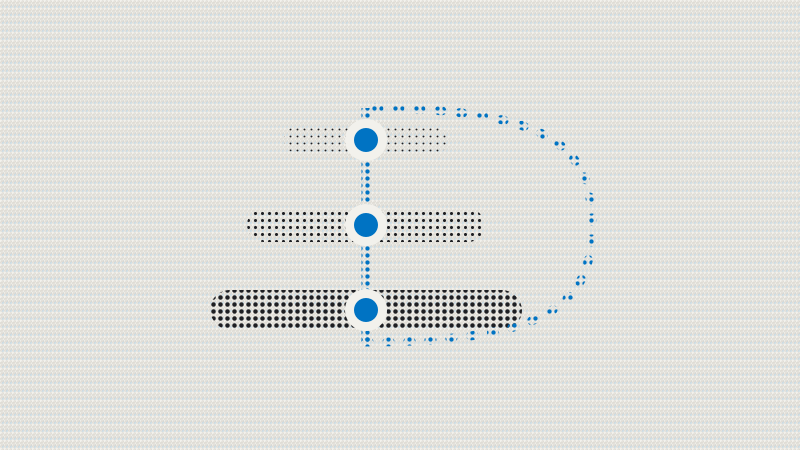
Autonomous perception: always-on autonomous attention
A robot's body is not only a tool for carrying out tasks. It is also the interface through which it perceives its environment, expresses its state, and communicates with people.
Today that interface is “dead” most of the time. Even while a robot is computing, waiting, or preparing to act, the people around it can hardly anticipate what it will do.
We want robots to genuinely come alive. We call this continuous, legible state of being a robot's always-on sense of life.
It is not an illusion of life produced by animation. It means that at every moment of operation the robot has a managed, expressible state of attention — always-on autonomous attention:
a closed attention loop that works for the robot's entire runtime: continuously choosing, from current beliefs, task goals, and constraints, what most deserves care right now, and dynamically allocating perception, computation, motion, and expression; as new evidence arrives, holding, switching, or releasing attention, or entering deliberate monitoring or idle.
Only when a robot can continuously manage and express its attention can a person know: did it see me, is it listening, and can I trust what it will do next.
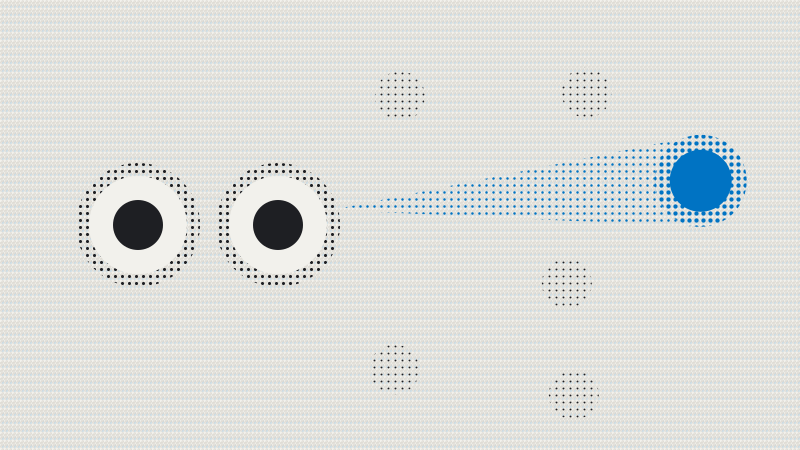
Understanding and prediction: the social world model
To really enter human society, a robot needs an internal model of social situations — one that holds not just space, objects, and motion, but people's goals, circumstances, identities, relationships, and tendencies, and how all of these keep shifting as the interaction unfolds.
We call this the social world model. It has to help the robot answer three questions:
- What is happening right now?
- What might happen next?
- How should I take part?
These questions rarely have a single answer. The same motion, performed across different identities, relationships, and cultures, can mean entirely different things. A robot has to keep judging under incomplete information, update its understanding as new evidence arrives, and actively ask people to confirm when uncertainty runs too high.
Solfa is building a training ground for the social world model — we call it Wilda Dojo. A robot that has not yet learned how to enter society is like an untrained wild man: it needs a dojo where it can try again and again, receive feedback, and correct its behaviour, until it gradually learns to communicate and collaborate with people.

Social channels: embodied multimodal real-time interaction
Face to face, people rarely rely on complete sentences alone. Meaning, sound, rhythm, expression, gaze, posture, and movement build understanding together. We interrupt, hesitate, glance back, lean in — and change our minds mid-expression.
A robot needs the same coherence across these channels. The moment its words, its gaze, its posture, and its next movement come apart from each other, people can no longer read its real state and intent — and trust becomes hard to build.
So Solfa is training an embodied multimodal real-time interaction model. We want a robot's expression and behaviour to stop depending on hand-built presets, and to learn instead from real human behaviour and interaction.
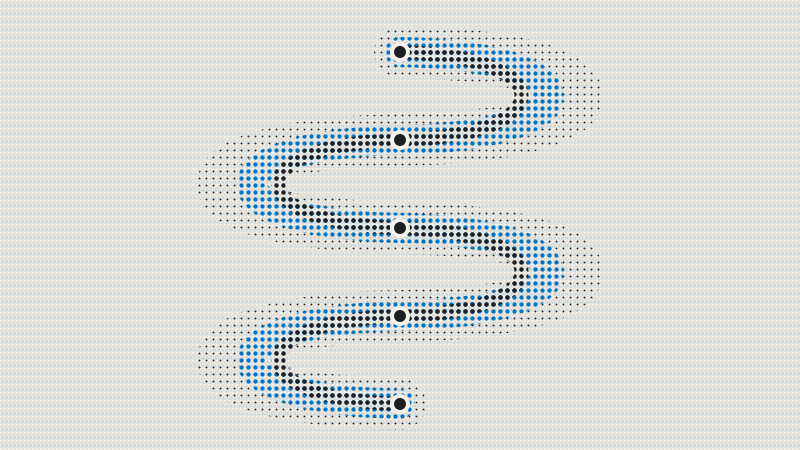
The future: continual learning in human–robot collaboration
Embodied AI has begun to study how robots learn by interacting with the physical environment, with objects, and with tasks. Solfa cares more about a fact that should not be overlooked: robots will ultimately serve people above all, and people hold the most experience of acting in the physical world and in society.
So we cannot leave people out of the robot's path of learning. Quite the opposite —
interaction with people is not just where a robot's capabilities get applied. It is where experience is produced. Communication brings understanding, collaboration produces experience, feedback corrects behaviour.
All of it feeds one learning loop:
Human-Robot Interaction → Experience → Learning → Capability

Why this must start now
Social intelligence is easy to misread as a problem that can wait: first give robots general enough manipulation skills, then add interaction design, behaviour rules, and safety limits once they reach products and real settings.
But what a robot attends to decides what experience it collects; how it understands a situation decides what actions it chooses; how it acts decides what feedback people give back.
If training data, model structure, and evaluation form for years around isolated tasks alone, people and social situations cannot be fully “installed” at the last minute.
The experience and data social intelligence needs cannot come from object-manipulation data alone. They come from natural interaction between real people and robots — and the relationships and norms keep changing from one setting to the next.
People adapt to robots, too. Deploy a robot without social intelligence, and people will interact with it only within what it can already do. The interaction data that matters never gets produced, and the robot never gets to learn how to communicate with people at all.
The later this starts, the more likely robots are to gain powerful abilities to act — and only then discover they do not know how to be around the very people those abilities are meant to serve. Robots like that tend to be the dangerous ones.
Developing safely, with the public taking part
Robots ultimately serve people. People's safety, privacy, and right to choose are preconditions for research and for products.
Safety is not a set of limits added after a robot becomes capable. It also comes from whether the robot understands the situation, can express its state, knows when to ask a person to confirm — and whether people always keep the right to refuse, correct, and walk away.
Robots that collaborate with people are still early-stage research, and their capabilities cannot grow without real interaction. But the public should not merely be a source of data for robots — they should take part in shaping how robots behave.
So before entering homes and private life, we will first run limited tests and deployments in public settings with clear boundaries and controllable risk: stating capability limits and research purposes plainly, handling interaction data with care, and publishing our progress step by step.
We hope to work with researchers, engineers, designers, industry partners, and the public to find the right way for robots to enter society.
Social intelligence: the intelligence that brings robots into society